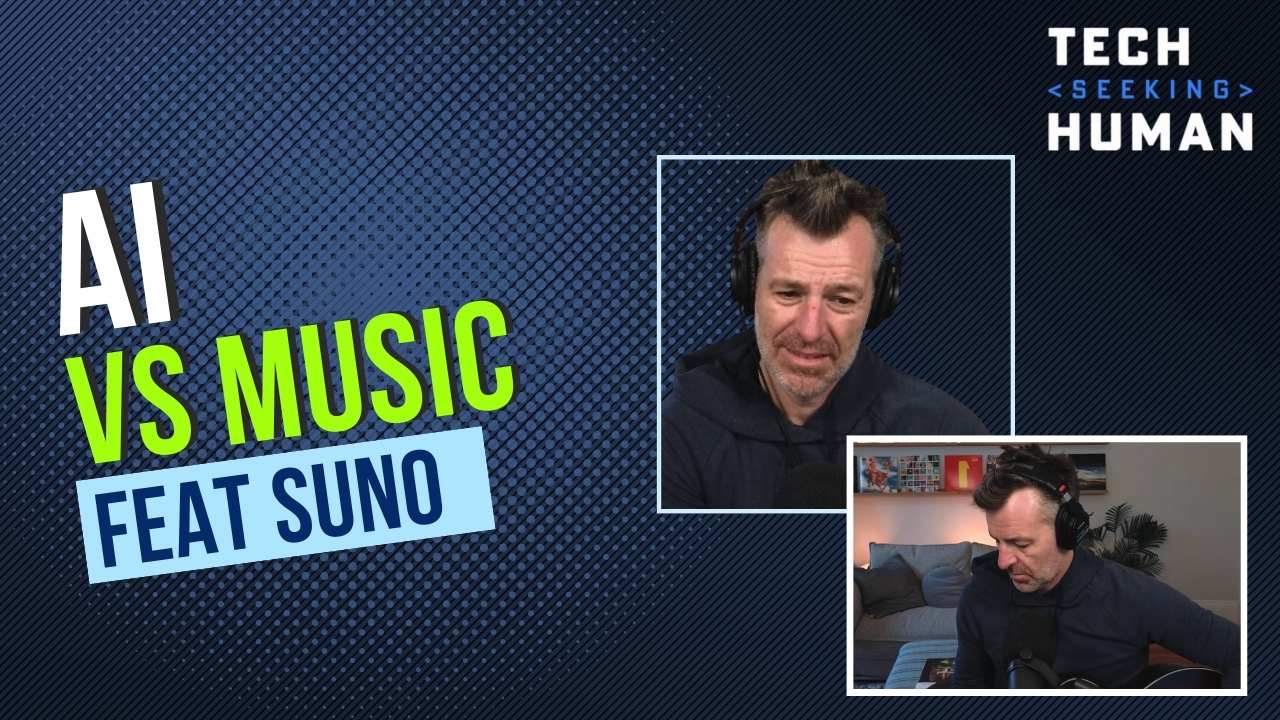
Artificial Intelligence is seeping into every corner of our lives, but what happens when it enters the world of music? Music has always been deeply personal, an ancient form of human expression that transcends cultures and generations. The idea that AI could replicate—or worse, replace—this raw creativity is unsettling. For those of us who see music as more than just sound, the prospect of AI-generated music feels like a big question mark hanging over the future of art.
My First Encounter with Suno, an AI Music Tool
After years of ignoring AI music tools, I recently gave Suno a shot. I wasn’t thrilled. In fact, I was hesitant as soon as a friend messaged me saying, "This is the best AI music tool out there." Begrudgingly, I downloaded the app with little hope and signed up for the free version.
What I didn’t expect was the speed at which Suno worked. Within minutes, I was writing a song. At the time, my focus was on a deeply personal topic—my teenage daughter’s recent experiences with bullying at her school in Boston. We’ve just moved from Australia, and she’s been struggling with the cold weather, the cultural differences, and kids making fun of her accent. I aimed for an acoustic vibe, something melancholy yet emotional.
Without much thought, I typed up a quick 190-word prompt and hit "Create." The result? A full song. Not just lyrics, but music complete with an acoustic guitar, piano, and even light drums.
How Does AI Handle Emotion in Music?
The first thing that hit me was how real it sounded. The female vocal version had warmth, and the male vocal had a certain depth, even if I didn’t love the tone. The guitars felt authentic, the subtle drums came in at the right moments, and the piano added dynamics. The AI didn’t just throw a tune together—it layered it. The structure was there: verses, choruses, a natural build-up. It felt like something a professional producer could’ve spent hours on.
Yet, despite its polish, something was missing. For all its technical prowess, Suno’s creation left me uneasy. Could an algorithm really "feel" the sadness of a bullied teenager or the homesickness of a family far from Australia? It mimicked human creativity, but it wasn’t human creativity.
Testing AI vs Human: Recreating the Song
To test the AI’s work, I decided to sing the song myself using its lyrics. Guitar in hand, I gave it a crack. And you know what? The song worked. Its chords matched the tone of the lyrics, and the melody flowed. But as I played it, a knot formed in my stomach.
Here was a song that took me less than two minutes to generate—and it worked. That's what made it so unsettling. I didn’t labour over the lyrics. I didn’t pour my heart into composing the chords. I didn’t fight through creative blocks. Suno did all that for me—and it did it well.
The Bigger Questions: Ownership and Creativity
AI isn’t just creating music—it’s reshaping the rules of ownership and originality. If I record the AI's song, who owns it? Is it Suno, the user who gave the prompt, or someone else entirely?
Imagine a scenario where an AI generates thousands of melodies, claims IP over them, and floods platforms like Spotify. How do artists compete with that? It’s not far-fetched to think we could see an entire library of AI-generated tracks dominating playlists by 2025. And if listeners can’t tell the difference between AI and human music, will they even care?
Is This the End of Musical Artistry?
Music has always been about more than just hitting the right notes. It’s about emotion, connection, and storytelling. When you listen to a song, you can often feel the sweat, tears, and late nights that went into creating it. But with AI tools like Suno, that process gets stripped down to an algorithm.
Yes, Suno can build a song in seconds. It can layer instruments, match tones, and create a polished track. But it can’t replicate the messy, human journey of creating music. The heartbreak of failed attempts. The joy of sudden inspiration. The irreplaceable human-ness of art.
And that’s the paradox we’re facing. AI is capable of producing beautiful-sounding music, yet it may lack the depth and authenticity that makes music meaningful.
Where Do We Go From Here?
AI like Suno is powerful, but it also raises uncomfortable questions about the value of creativity and originality. Are we okay with trading raw artistic expression for convenience? Will listeners care about whether their favourite songs were written by a person or a machine?
It’s important we keep asking these questions as AI continues to expand its role in the creative world. Music can’t lose its soul to algorithms. At least, I desperately hope it doesn’t.